Reminders – Time change and Photos on All Saints’ Day – November 1, 2026

⏰Time change – Eastern Standard Time returns this weekend, so remember to turn your clocks back one hour before retiring this Saturday night.

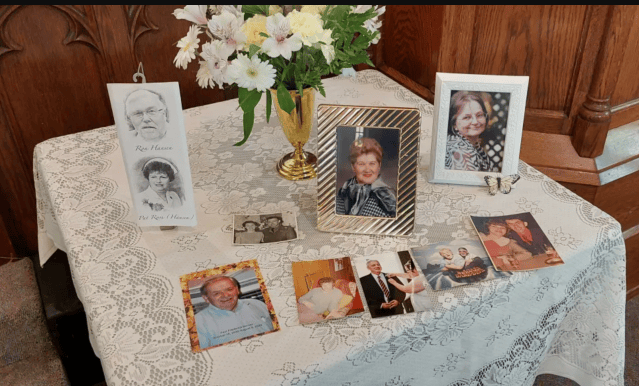
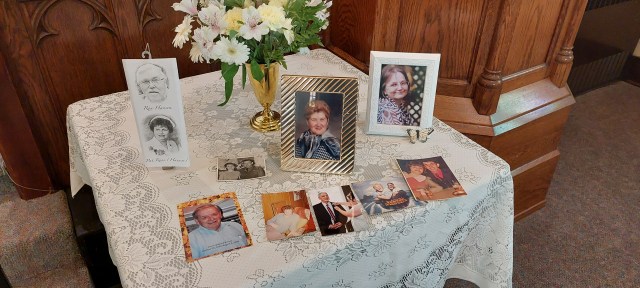
✝️All Saints’ Day – Remember to bring a photograph of any loved one you would like to remember on All Saints’ Day. The photos will be placed on a table at the front of the worship space.

Posted in Uncategorized | Leave a comment

Death of Church Member – Erhard Schafrick

The family announces the passing of Erhard Schafrick (Welland, Ontario) on October 24, 2026. Erhard, born on October 22, 1935, was part of many shared moments and relationships throughout life. Leave a sympathy message to the family in the guestbook on this memorial page of Erhard Schafrick to show support.

He was predeceased by: his brothers, Waldemar, Herbert, Horst and Gustav “Gus” Schafrick (Amalie). He is survived by: his wife Olga Schafrick; his children, Peter Schafrick (Gina), Robert Schafrick and Linda Schafrick (Luke Edwards); his grandchildren, Stella and Maxx; his sibling Ursala Paul (Joe); and his sister-in-law Martha Schafrick.

If desired, memorial donations may be made the Alzheimer Society.

Posted in Obituary 2026 | Leave a comment

An All Saints’ Sunday Photo Request by Pastor Bart

All attending the service are invited to bring a photograph of any loved one they would like to remember on All Saints Day. The photos will be placed on a table at the front of the worship space. All will be invited during the worship service to come to the display for moments of remembrance and reflection. Please remember to take your photo home at the conclusion of the service.

November 5, 2023

Posted in Uncategorized | Comments Off on An All Saints’ Sunday Photo Request by Pastor Bart

Reformation Sunday – October 25, 2026

Attendance today -> 23  –  Last year -> 14

Sermon 🔈 (audio only)

Transcript of Gospel and Sermon

Worship Guide

Posted in Uncategorized | Comments Off on Reformation Sunday – October 25, 2026

Reminder – Special Congregational Meeting After This Week’s Service – October 25, 2026


Worship Guide

Posted in Uncategorized | Comments Off on Reminder – Special Congregational Meeting After This Week’s Service – October 25, 2026

The Gospel and Commentary – 22nd Sunday After Pentecost – October 25, 2026

Reformation Sunday: Twenty Second Sunday after Pentecost

Prayer of the Day
Almighty God, gracious Lord, we thank you that your Holy Spirit renews the church in every age. Pour out your Holy Spirit on your faithful people. Keep them steadfast in your word, protect and comfort them in times of trial, defend them against all enemies of the gospel, and bestow on the church your saving peace, through Jesus Christ, our Saviour and Lord, who lives and reigns with you and the Holy Spirit, one God, now and forever. Amen.

Gospel: Matthew 22:34-46
34 When the Pharisees heard that [Jesus] had silenced the Sadducees, they gathered together, 35 and one of them, an expert in the law, asked him a question to test him. 36 “Teacher, which commandment in the law is the greatest?” 37 He said to him, “ ‘You shall love the Lord your God with all your heart and with all your soul and with all your mind.’ 38 This is the greatest and first commandment. 39 And a second is like it: ‘You shall love your neighbour as yourself.’ 40 On these two commandments hang all the Law and the Prophets.” 41 Now while the Pharisees were gathered together, Jesus asked them this question: 42 “What do you think of the Messiah? Whose son is he?” They said to him, “The son of David.” 43 He said to them, “How is it then that David by the Spirit calls him Lord, saying, 44 ‘The Lord said to my Lord, “Sit at my right hand, until I put your enemies under your feet” ’? 45 “If David thus calls him Lord, how can he be his son?” 46 No one was able to give him an answer, nor from that day did anyone dare to ask him any more questions.

Commentary—“toward a sermon”
The plan was to draw a line between Jesus’ reply about loving neighbour as oneself and the riddle Jesus poses about the relationship between the Messiah and the venerated King David. The value of reading other commentaries is to keep preachers honest…and to keep us hearers honest too.

Love God and love neighbour is so easy to say. It’s tougher to do. Maybe we know that love can be understood as what we do for the benefit of others. Can we always be sure we know what that good is? The challenge might be to help others when we can while paying close attention that we interact as equals. A couple of commentators suggest that humility is the thing that enables us to love our neighbour as we love ourselves.

If we skim from the top of the riddle we see something suggesting humility shown by King David. The riddle isn’t meant as a change of subject we don’t think….more like amplifying what it means to love one neighbours as one self. We won’t totally unpack the riddle today. Instead we’ll consider what it really takes to obey the commandment everybody agrees is “the biggie”.

Maybe the repeated attempts to publicly embarrass Jesus betray a lack of love. Maybe the thing sociologists call the honour and shame code gets in the way of loving one’s neighbour. Public challenge riposte events were designed to define the social pecking order. Very much a win/lose sort of proposition. Tough to love ones neighbour as yourself when everybody is jockeying for position.

Ironically even when we try to be humble, we’re kind of proud of our virtue. You might recall the TV series Poirot starring Sir David Suchet. In one episode Poirot decides humility would be to his advantage and he announces that in his quest to cultivate some, “there will be nobody as humble as Poirot”.

When Jesus confers blessing on the humble, he uses a literal term…we could translate it “down to earth”. Maybe other word nerds enjoy the connection between the words “hummus”, “humility”, and “human”. The connection illustrates that we are creatures and we’re part of creation. We are entrusted with care of other parts of creation, because we’re related to it all. Kinship may well be at the heart of humility.

The writer and preacher Frederick Buechner says truly loving others requires a high level of self awareness. He says to love your neighbour as yourself requires you to love yourself as you love your neighbour. Our task, Buechner says, is that we share the self we love instead of keeping it in a “perpetual safe deposit box” (Buechner, Wishful Thinking a Theological ABC, page 87-88).

The riddle about the Messiah being Son of David and yet Lord over David presents a paradox. The early Christians heightened that paradox with a hymn that finds its way into the letter to the Philippians…In prose form…Jesus doesn’t regard equality with God to be exploited. Instead he becomes human…he takes on the form of a servant and even becomes obedient to the point of death on the cross (Philippians 2:5-11). From this place of moral authority Jesus calls on us as the church to love our neighbour. He embodies that love. He empowers us to love as we’ve been loved. Living these paradoxes and riddles might be what we mean about a church in constant re-forming as we learn and grow and start new every day.

Posted in Uncategorized | Comments Off on The Gospel and Commentary – 22nd Sunday After Pentecost – October 25, 2026

21st Sunday After Pentecost – October 18, 2026

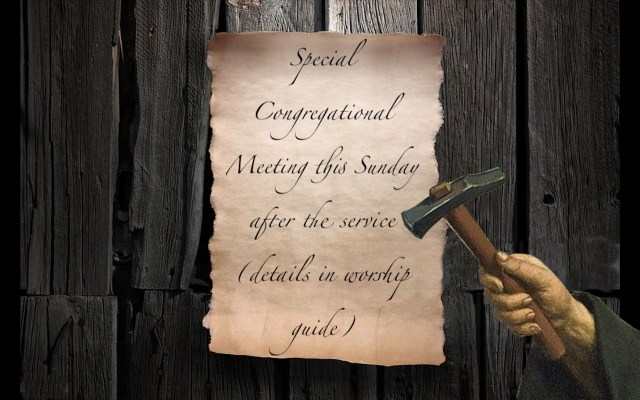
**SPECIAL CONGREGATIONAL MEETING – SUNDAY,OCTOBER 25th (after the service) FURTHER DETAILS IN THIS WEEK’S WORSHIP GUIDE**

Attendance this date -> 14  –  Last year -> 14

Sermon 🔈 (audio only)

Transcript of Gospel and Sermon

Worship Bulletin

Posted in Uncategorized | Comments Off on 21st Sunday After Pentecost – October 18, 2026

The Gospel and Commentary – 21st Sunday After Pentecost – October 18, 2026

Twenty-First Sunday after Pentecost—October 18, 2026

Prayer of the Day
Sovereign God, raise your throne in our hearts. Created by you, let us live in your image; created for you, let us act for your glory; redeemed by you, let us give you what is yours, through Jesus Christ, our Saviour and Lord.Amen.

Gospel: Matthew 22:15-22
15 The Pharisees went and plotted to entrap [Jesus] in what he said. 16 So they sent their disciples to him, along with the Herodians, saying, “Teacher, we know that you are sincere, and teach the way of God in accordance with truth, and show deference to no one, for you do not regard people with partiality. 17 Tell us, then, what you think. Is it lawful to pay taxes to Caesar or not?” 18 But Jesus, aware of their malice, said, “Why are you putting me to the test, you hypocrites? 19 Show me the coin used for the tax.” And they brought him a denarius. 20 Then he said to them, “Whose head is this and whose title?” 21 They answered, “Caesar’s.” Then he said to them, “Give therefore to Caesar the things that are Caesar’s and to God the things that are God’s.” 22 When they heard this, they were amazed, and they left him and went away.

“Towards a sermon—commentary and reflections” Matthew is clear what the debate is not about. Also what it is about. Two factions, (the pro-government-when it suits us Herodians and the anti-empire-make deals to keep-the wolves- at bay Pharisees)usually at odds find common cause conspiring to publicly discredit Jesus by setting up a double bind, designed to trap him in his own words. Spoiler, the critics shuffle away, nonplussed because Jesus not only ‘threads the needle’ he reframes the entire conversation.

Flipping the ‘presenting question’ brings us closer to the core issues Jesus wants to talk about. Is it legal to NOT pay taxes? Mind you, an empire that never takes no for an answer wouldn’t take lightly any delinquency on paying taxes and tribute.

In effect, Jesus asks his interlocutors, “What’s in your wallet?”. The denarius coin bears the emperor’s likeness and his title. For the religiously inclined whose tradition forbids graven images and titles ascribing god-qualities to a conquering emperor, having Roman coins jingling in the change purse might create a tad of dissonance.

How long do you suppose Jesus paused while his critics inspected the coins they carried before he asked them to describe the denarius? In the same position, we might let the moment soak in a bit, right?

“So it’s Caesar’s likeness and title on this coin you carry?” The coin represents more than the metal from which its forged. To one degree or another, the coin’s message is that the empire owns its subjects.

Our own money buys us our daily food and shelter…money is like the passport that helps us participate in society. The currency we hold affords a bit of freedom; at least freedom to make some little choices like selecting Kraft Dinner over the generic store brand. If you have enough toonies to rub together you get to choose the neighbourhood you live in, the vehicle you drive, and in some cases to elect to have medical care overseas because of the lack of availability here.

Tempted as we might be to throw popcorn at Jesus’ opponents and to boo from the cheap seats, we might want to check our wallets and our gut at the same time…. Carrying the Roman coin, whether or not you like the empire is how you survive. Distasteful as the regime is, we can’t escape getting some of its stink on us. In short, you gotta pay to play.

Paying to play means we more or less accept the legitimacy of those who’ve set up the game. Our participation plunges us into some deeper questions like legality versus moral legitimacy. In some places slavery is legal. Racial Segregation, Sharia law, honour killings, public executions, and toting around your private arsenal of assault weapons is legal in places too. Pretty sure most of us would say any of these government sanctioned activities is morally bankrupt.

‘What’s in the wallet’ brings uncomfortable questions—to what degree do we participate in the empire and still keep our own moral integrity and live the tenets of our faith? How are we complicit with the empire because we go along to get along? How often do we comply because resisting bears too high a price tag?

Matthew’s community, like Jesus’ disciples and critics, had to wrestle with these questions. Jesus words about rendering to Caesar aren’t just a ploy. Nor does Jesus say that the emperor gets his cut and Jesus takes his—even Steven.

We don’t get off scot-free either. Maybe it’s good for trade that the waters near the arctic are becoming more navigable as ice melts. At what cost to the planet? Maybe the price of fossil fuel will decrease again. How does creation pay the tab? When resources dry up, how does that affect those who are already barely getting by?

What is the rendering to Caesar all about then? Maybe its the recognition that we’re in the world, but we don’t have to be of it, as Jesus says. Rendering to God means that the empire doesn’t get to dictate the tune we dance to in our moral, religious and ethical lives. God does. And Jesus spells out the tune and tempo where those who mourn are comforted, those who show mercy find mercy, those who wage peace are dubbed God’s children. Jesus’ final parable, which we will consider in a month or so also drives home the point that how we care for the ‘least of these’ reflects how we as community buy into to all Jesus is about.

How do Jesus’ mandates to love inform how we live in a day to day world where Caesar mints the coins and calls the shots? Maybe the Herodians and the Pharisees have something to teach us—we can take a minute on a regular basis and look at the denarius coin (or its equivalent) and reflect on who we are and whose we are.

bsc October 2026
Posted in Uncategorized | Comments Off on The Gospel and Commentary – 21st Sunday After Pentecost – October 18, 2026

20th Sunday After Pentecost – October 11, 2026

**SPECIAL CONGREGATIONAL MEETING – SUNDAY,OCTOBER 25th (after the service) FURTHER DETAILS IN THIS WEEK’S WORSHIP GUIDE**

Attendance this date -> 13 Last year -> 23

Sermon 🔈 (audio only)

Gospel and Sermon Transcript

Worship Guide

Posted in Uncategorized | Comments Off on 20th Sunday After Pentecost – October 11, 2026

The Gospel and Commentary – 20th Sunday Afterr Pentecost – October 11, 2026

Twentieth Sunday after Pentecost-October 11 Thanksgiving Day October 12

Prayer of the Day
Almighty God our Father, your generous goodness comes to us new every day. By the work of your Spirit lead us to acknowledge your goodness, give thanks for your benefits, and serve you in willing obedience, through Jesus Christ, our Saviour and Lord. Amen.

Gospel: Luke 17:11-19
11 On the way to Jerusalem Jesus was going through the region between Samaria and Galilee. 12 As he entered a village, ten men with a skin disease approached him. Keeping their distance, 13 they called out, saying, “Jesus, Master, have mercy on us!” 14 When he saw them, he said to them, “Go and show yourselves to the priests.” And as they went, they were made clean. 15 Then one of them, when he saw that he was healed, turned back, praising God with a loud voice. 16 He prostrated himself at Jesus’s feet and thanked him. And he was a Samaritan. 17 Then Jesus asked, “Were not ten made clean? So where are the other nine? 18 Did none of them return to give glory to God except this foreigner?” 19 Then he said to him, “Get up and go on your way; your faith has made you well.”

Commentary:
Professor Eric Barreto from Princeton University warns us about breezing through Gospel readings thinking we know them by saying, “If Jesus’ words never strike me as strange, if Jesus words never cause me a sense of unrest, if Jesus words never trouble me, then I can be sure of one thing: I can be sure I am missing something important”.(He often says this and it appears in material from Working Preacher, from Luther Seminary in Minnesota).

Why does Jesus call out people who just did what he told them to do: show themselves to the priests so they can be reintegrated into community? Why does Luke (and also Jesus) make a big deal that the one who does praise God is a Samaritan—a foreigner. And finally what is significant about the illness affecting these ten people living on the margins between Samaria and Galilee?

Outsiders: We might get purchase on two of our questions by reviewing ancient protocols for quarantine for people with skin diseases. These customs and protocols are recorded in the books of Leviticus and Numbers in the Hebrew scriptures (The Old Testament). The next item of information is a bit grisly, so beware….many skin diseases literally were decomposition leaving people to look like they were dead or dying (zombie films might come to mind). It’s as if “death comes calling”. Strict rules and laws surrounded the way dead creatures were to be handled.

To avoid contagion, those with such necrotic (tissue dying) diseases were quarantined and required to tear their clothes, and wear their hair loose (for women this would be particularly troubling given social customs about hair being worn gathered and covered). Should any unaffected person approach, those with infections were required to call out “unclean! unclean!” An ‘insider’ becomes an outcast for as long as the physical disease persists.

Even following recovery, those who had been infected were to have a priest inspect wounds and skin. Then a 7 day probationary period began so sufferers would be monitored for a relapse. Therefore, becoming an insider again might be a tenuous proposition. Given these long standing customs then….

Jesus approaches ten people with infection, isolated from family and community and suffering physically and emotionally— and looking like ‘death warmed over’. The legal and acceptable thing to do would be to avoid these ten people “like the plague”. Jesus “goes there” and the scandal begins!

And one of them was a Samaritan! The enmity between the Jewish people and Samaritans was centuries old. Alarming that a “foreigner”, a Samaritan would languish among his sworn enemies and now fellow sufferers.

Jesus heals ten people without discriminating between ethnic origins. Why would Jesus make a point then of saying the one who returned to praise God was a foreigner?

Being from literally another place is to be dis-placed. Perhaps this person is even more isolated than the other nine because he lacks extended family or a home to which he hopes to return. The “foreigner” suffering a skin disease is about as outside as an outsider can get. Once healed his response causes Jesus to remark about its oddity.

Luke makes a point of lifting up the times Samaritans flout the norms of society and wind up upholding higher values. For instance, Dr. Barreto notes in an article from Working Preacher that when the Samaritan helps someone who had been mugged the victim faces a fate in which a familiar enemy might well be the rescuer. Here the Samaritan returns not to say thanks, but to praise God. Sociologists Bruce Malina and Richard Rohrbaugh note that in peasant culture social equals didn’t thank each other. Instead they repaid in kind somehow. So for nine people, not saying thank you to Jesus is standard practice. So is going to show themselves to the priests for re-integration into community, For most, this would be a satisfying end to the story.

But that Samaritan….who doesn’t have a priest to inspect his skin or readmit him to community does something scandalous and very public. He acknowledges that there is no way he could EVER repay the gift he’s received. He returns to Jesus and loudly praises God who in many respects gives him back his life! The Samaritan’s public giving thanks to God also signifies that he has everything he needs now to put his life back together.

Things to ponder:

about disconnection In what ways might you identify with any of the ten people Jesus heals? What times in your life have you felt especially ‘cut off’ or displaced? Where did you experience connection when we all were isolated and quarantined when the COVID virus was most virulent and contagious?

At what point during the Covid crisis did you feel safe enough to begin reconnecting with people and resuming accustomed routines?

about belonging In what ways might you particularly identify with the Samaritan? Have you ever been the “foreigner”—not from here or totally belonging? What did that experience teach you?

about gifts large and small What gifts do you recognize as ones you would never be able to repay? Communities gather to praise God. What does such gathering mean in terms of God’s bringing life where there was death?

Posted in Uncategorized | Comments Off on The Gospel and Commentary – 20th Sunday Afterr Pentecost – October 11, 2026